

Base training is an 8-16 week training phase emphasizing low-intensity Zone 2 riding at 55-75% FTP to build aerobic capacity through mitochondrial development, capillarization, and enhanced fat oxidation. This foundational period prioritizes high-volume, low-intensity work (80-95% of total training time) over intervals, establishing the physiological platform that supports all subsequent threshold development, VO2max training, and race performance.
What is Base Training?
Base training focuses on low-intensity, high-volume riding that develops your aerobic engine through physiological adaptations at the cellular level. This foundational phase typically spans 8-16 weeks during off-season preparation, prioritizing long steady rides at 55-75% FTP rather than intervals, tempo efforts, or threshold work.
Primary Goal: Maximize mitochondrial density, enhance capillarization, improve fat oxidation efficiency, and increase glycogen storage capacity—adaptations requiring sustained aerobic stimulus without excessive training stress that compromises recovery and consistency.
The term “base” reflects this training’s role as the platform supporting your fitness pyramid. Elite cyclists demonstrate that approximately 80% of total training volume occurs at low intensity TrainingPeaks, with high-intensity intervals representing a small but crucial component during build phases leading to priority events.
Why Base Training Works: The Science
Mitochondrial Biogenesis

Zone 2 training activates PGC-1α, a master regulator triggering mitochondrial proliferation within muscle cells TrainingPeaks. More mitochondria equals greater capacity for aerobic ATP production—the energy currency fueling sustained cycling performance during gran fondos, century rides, and stage races.
This adaptation occurs preferentially during extended low-intensity efforts. While high-intensity intervals also stimulate mitochondrial development, they impose recovery costs preventing the volume accumulation necessary for maximum adaptation. Think quality through quantity: more total hours at aerobic intensity produces superior mitochondrial density versus fewer hours of crushing intervals.
Capillary Development and Oxygen Delivery
Base training increases capillary networks surrounding muscle fibers, improving oxygen and nutrient delivery while enhancing metabolic waste removal. Greater capillarization means your cardiovascular system efficiently supplies working muscles during long endurance rides without premature fatigue from oxygen debt or lactate accumulation.
Fat Oxidation and Metabolic Efficiency
Training your body to preferentially burn fat during moderate-intensity efforts spares limited glycogen reserves for high-intensity surges, climbs, and finishing efforts. Base training optimizes enzyme systems (hormone-sensitive lipase, carnitine palmitoyltransferase) that liberate and transport fatty acids for oxidation.
Result: Extended time to exhaustion during long rides, reduced reliance on external carbohydrate intake, and ability to maintain power output when glycogen depletes during final hours of endurance events.
Aerobic Enzyme Production
Low-intensity training upregulates oxidative enzymes (citrate synthase, succinate dehydrogenase) within mitochondria, accelerating the Krebs cycle and electron transport chain. These enzymes determine how quickly your aerobic system processes fuel substrates—think of them as limiting the maximum speed your metabolic engine can run sustainably.
Base Training Principles
The 80/20 Rule

Polarized training distribution—80% low-intensity (Zone 1-2), 20% high-intensity (Zone 4+)—produces optimal results for endurance athletes TrainingPeaks. During pure base phases, this ratio often shifts to 90/10 or even 95/5, reserving virtually all training stress for aerobic development.
Common Mistake: Many amateur cyclists train too hard during easy rides and too easy during hard workouts, spending excessive time in the “grey zone” (Zone 3 tempo) that accumulates fatigue without maximizing adaptations. Commit to genuinely easy base training—conversation should flow effortlessly throughout Zone 2 efforts.
Progressive Volume Increase
Build training volume gradually using the 10% rule: increase weekly hours by no more than 10% to prevent overtraining, burnout, and overuse injuries. Patient progression allows physiological systems—not just cardiovascular but also musculoskeletal, connective tissue, and neurological—to adapt without breakdown.
Sample 12-Week Progression:
- Weeks 1-4: 6-8 hours weekly (establish baseline consistency)
- Weeks 5-8: 8-10 hours weekly (build volume tolerance)
- Weeks 9-12: 10-13 hours weekly (peak base volume before build phase)
Recovery weeks every 3-4 weeks cut volume 30-40%, facilitating adaptation while preventing accumulated fatigue. Your body builds fitness during recovery, not while training—respect this principle.
Consistency Over Intensity
Six months of consistent Zone 2 riding produces dramatically superior results versus sporadic high-intensity heroics followed by forced rest from exhaustion or illness. Base training succeeds through steady accumulation—think compound interest for your aerobic system.
Practical Application: Four 90-minute rides weekly proves more effective than two crushing 3-hour suffer-fests followed by a week recovering. Sustainable training loads enable adaptation; excessive stress triggers breakdown.
Effective Base Training Workouts
Long Steady Distance (LSD)
The cornerstone base workout: 2-5 hour rides maintaining 55-70% FTP with minimal intensity variation. These sessions maximize adaptation stimulus while teaching your body to sustain power output and maintain pedaling mechanics during extended efforts.
Execution Guidelines:
- Monitor power meter maintaining consistent output
- Avoid surging on climbs—stay within Zone 2 ceiling
- Pedal through descents rather than coasting
- Maintain 85-95 RPM cadence for neuromuscular efficiency
- Consume 30-60g carbohydrates hourly to sustain power
Frequency: 1-2 long rides weekly, typically weekends when time permits. Gradually extend duration: start 2 hours, add 15-30 minutes every 2-3 weeks until reaching 4-5 hour capacity for ultra-endurance event preparation.
Sweet Spot Base (SSB)
Alternative approach for time-crunched athletes: combine Zone 2 foundation with sweet spot intervals (88-94% FTP) delivering threshold benefits with reduced recovery demands. TrainerRoad’s Sweet Spot Base plans popularized this methodology, compressing traditional base training into 6-8 week blocks.
Weekly Structure:
- Tuesday: Sweet spot workout (2×20 or 3×15 minutes at 88-92% FTP)
- Thursday: Sweet spot or tempo intervals
- Saturday: Long Zone 2 endurance ride (2-3 hours)
- Fill remaining days with easy recovery spins or rest
Tradeoff: SSB builds FTP faster initially but may compromise long-term aerobic development versus traditional high-volume base training. Best suited for cyclists with limited training time or those prioritizing early-season fitness.
Tempo Rides
Occasional tempo efforts (75-85% FTP) during base phases teach your body to sustain moderate-hard intensity while developing muscular endurance. Limit tempo to once weekly—excessive Zone 3 work creates “junk miles” accumulating fatigue without optimal adaptation.
Application: 60-90 minute tempo rides work well mid-week, substituting for a standard Zone 2 session. Useful for cyclists preparing for gran fondos or sportive events requiring sustained moderate efforts.
Indoor Trainer Sessions
Smart trainers (Wahoo KICKR, Tacx NEO, Elite) excel for base training during winter months when darkness, weather, or safety concerns limit outdoor riding. Platforms like Zwift, TrainerRoad, and Wahoo SYSTM provide structured workouts, virtual routes, and ERG mode maintaining precise Zone 2 power targets.
Advantages: Perfect environmental control, no coasting or traffic interruptions, precise power execution, entertainment reducing psychological burden of long steady efforts.
Considerations: Indoor training elevates core temperature faster than outdoor riding—use fans aggressively and reduce outdoor power targets by 5-10% for equivalent physiological stress.
Base Training Nutrition
Fueling Strategy
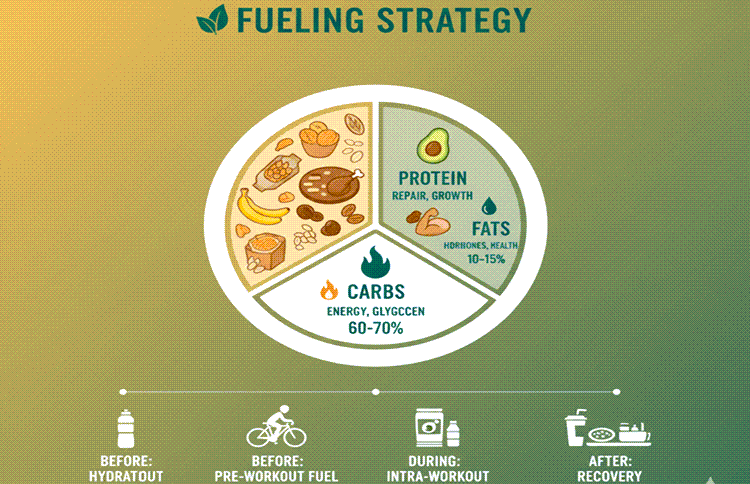
Carbohydrate Periodization: Train some Zone 2 rides in low-carbohydrate states (fasted morning sessions or glycogen-depleted) to enhance fat oxidation adaptations. Balance with well-fueled long rides developing race-specific nutrition tolerance.
Hydration: Dehydration degrades aerobic performance disproportionately. Consume 500-750ml fluid hourly during base rides, adjusting for temperature and sweat rate.
Long Ride Nutrition: Practice consuming 60-90g carbohydrates hourly during 3+ hour efforts, training your gut to process nutrition while riding—crucial preparation for century rides, gran fondos, and ultra-endurance events where nutritional failure ends performances prematurely.
Recovery Nutrition
Consume 20-40g protein within 2 hours post-ride supporting muscle protein synthesis and adaptation. Combine with carbohydrates (1.2g per kg bodyweight) replenishing glycogen for next session.
Structuring Your Base Training Block
Traditional 12-Week Base Phase
Weeks 1-4 (Foundation):
- Volume: 6-8 hours weekly
- Focus: Establish consistency, refine pedaling technique
- Long ride: 2-2.5 hours
- Intensity: 95% Zone 1-2, occasional tempo
Weeks 5-8 (Development):
- Volume: 8-11 hours weekly
- Focus: Build aerobic capacity, extend duration
- Long ride: 2.5-3.5 hours
- Intensity: 90% Zone 1-2, weekly tempo or sweet spot
Weeks 9-12 (Peak Base):
- Volume: 10-13 hours weekly
- Focus: Maximize aerobic adaptation before build phase
- Long ride: 3.5-4.5 hours
- Intensity: 85% Zone 1-2, introduce threshold work sparingly
Week 13 (Recovery): 40-50% volume reduction before transitioning to build phase emphasizing threshold intervals, VO2max work, and race-specific preparation.
Time-Crunched Base Training

Limited to 6-8 weekly hours? Emphasize sweet spot base methodology: two quality sessions weekly plus maximum Zone 2 volume from remaining time.
Sample Week:
- Monday: Rest
- Tuesday: 90-minute sweet spot (2×20 at 90% FTP)
- Wednesday: 60-minute Zone 2
- Thursday: 90-minute tempo or sweet spot
- Friday: Rest or 45-minute easy recovery
- Saturday: 2.5-hour long Zone 2 ride
- Sunday: 90-minute Zone 2 or group ride
Result: ~7.5 hours total combining quality and volume for time-efficient base development.
Monitoring Base Training Progress
Key Performance Indicators
Resting Heart Rate: Gradual decline (5-10 BPM) over 8-12 weeks indicates positive aerobic adaptation.
Power at Heart Rate: If 150 BPM previously produced 180 watts but now yields 195 watts, you’ve improved aerobic efficiency—same cardiovascular stress generates more power output.
Subjective Fatigue: Base training should feel sustainable. Persistent heavy legs, elevated resting HR, or declining motivation signals accumulated fatigue requiring additional recovery.
FTP Testing: Retest every 6-8 weeks. Expect 5-15 watt gains during base phases from aerobic development alone before adding high-intensity intervals.
Technology Tools
Training Platforms: TrainingPeaks, Golden Cheetah, and WKO5 software track training stress balance (TSB), chronic training load (CTL), and fitness trends identifying optimal progression versus overreaching.
Bike Computers: Garmin Edge and Wahoo ELEMNT devices display real-time power zones, lap averages, and normalized power ensuring accurate Zone 2 execution during rides.
Ready for intensity? Check our Zone 2 page for deep-dive science, then progress to Training Plans for complete periodized programs.
Frequently Asked Questions About Base Training
How long should base training last?
Base training typically spans 8-16 weeks depending on your experience level and season goals. Beginners benefit from longer 12-16 week base phases establishing consistent training habits and foundational fitness. Experienced cyclists may compress base training to 8-12 weeks if maintaining year-round fitness. The key is accumulating sufficient aerobic adaptation before adding high-intensity intervals.
Can I do intervals during base training?
Limited intensity work is acceptable during base training—one weekly tempo or sweet spot session maintains neuromuscular sharpness without compromising aerobic development. However, 80-90% of training time should remain in Zone 1-2. Excessive intervals during base phases accumulate fatigue, reduce total training volume, and limit the mitochondrial adaptations that make base training effective.
What if I don’t have time for long base training rides?
Time-crunched athletes can use sweet spot base methodology, combining Zone 2 foundation with 88-94% FTP intervals delivering threshold benefits in 6-8 hours weekly. Two quality sessions (2×20 minutes sweet spot) plus one long Zone 2 ride provides effective base development when 12-15 hour traditional programs aren’t feasible. Consistency matters more than total volume.
How do I know if my base training is working?
Monitor power at heart rate—if 150 BPM previously produced 180 watts but now yields 195 watts, you’ve improved aerobic efficiency. Resting heart rate should decline 5-10 BPM over 8-12 weeks. Subjectively, Zone 2 rides should feel easier at same power outputs, and you should recover faster between training sessions. Retest FTP every 6-8 weeks expecting 5-15 watt gains from base training alone.
About the Author
JAMES HICKMAN
James Hickman is a former Expert coach with USA Cycling who coached cyclists across all skill levels, from CAT 2 racers to intermediate and beginning riders. He also served as a coach for the Leukemia and Lymphoma Society’s Team In Training program, where he successfully trained individuals of varying abilities to complete century (100-mile) rides, combining his passion for cycling with meaningful community impact.
Ready for intensity? Check our Zone 2 page for deep-dive science, then progress to Training Plans for complete periodized programs.
Essential Base Training Equipment
Building a proper aerobic foundation requires the right tools. Here are our tested recommendations for effective base training:
Power Measurement
- Garmin Rally XC200 Power Meter Pedals – Transferable between bikes, accurate dual-sided power measurement
- Favero Assioma Duo – Best value dual-sided pedal power meters, rechargeable batteries
- 4iiii Precision 3 Crank Arm – Budget-friendly single-sided option for consistent Zone 2 monitoring
Indoor Training
- Wahoo KICKR Core – Direct drive trainer with excellent power accuracy and quiet operation
- Tacx NEO 2T Smart Trainer – Most realistic road feel, no calibration needed
- Elite Suito-T – Solid mid-range option for weekly base training sessions
- Wahoo KICKR Headwind Smart Fan – Pairs with trainers to adjust fan speed based on effort
- Lasko 20″ High Velocity Fan – Budget option providing strong airflow for long trainer sessions
Bike Computers & Heart Rate
- Garmin Edge 530 – Complete power-based training metrics, mapping, structured workouts
- Wahoo ELEMNT BOLT – Clean interface, easy setup, perfect for Zone 2 monitoring
- Garmin HRM-Dual – Reliable chest strap heart rate monitor for tracking aerobic development
- Polar H10 – Most accurate heart rate monitoring for tracking base training progress
Nutrition & Hydration
- SIS GO Isotonic Energy Gels – Easy-to-digest carbohydrates for rides over 2 hours
- Maurten Gel 100 – Gentle on stomach, ideal for long Zone 2 efforts
- Skratch Labs Sport Hydration Mix – Real-food ingredients, effective electrolyte balance
- Tailwind Endurance Fuel – Complete calories and hydration in one bottle
- Endurox R4 Recovery Drink – 4:1 carb-to-protein ratio for optimal recovery
- Optimum Nutrition Gold Standard Whey – Cost-effective quality protein for muscle recovery
Training Software
- TrainingPeaks Premium Subscription – Industry-standard training analysis and planning
- Zwift Membership – Makes indoor base training entertaining with virtual routes
- TrainerRoad Subscription – Sweet spot base training plans and structured workouts
Disclaimer: We are an Amazon affiliate and earn from qualified Amazon purchases with no cost to you. This is for ANY product that you purchase through our links.