

Training plans are structured programs using periodization to systematically progress from base building through race-specific fitness over 12-20 weeks. Effective plans incorporate progressive overload (gradual volume increases), recovery integration (rest weeks every 3-4 weeks), and specificity (matching training to event demands). Plans range from high-volume base training emphasizing Zone 2 aerobic development to event-specific programs for century rides, gran fondos, criteriums, and road racing.
What Makes an Effective Training Plan?
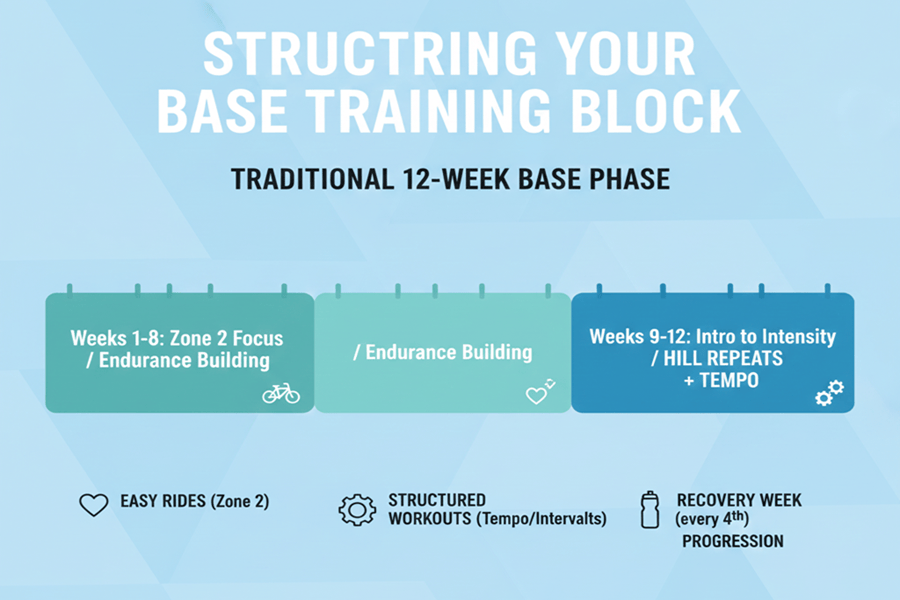
Effective training plans incorporate progressive overload, periodization, recovery integration, and specificity—principles backed by exercise physiology research and proven through decades of coaching experience with amateur and professional cyclists.
Core Components:
Periodization: Systematic variation in training volume and intensity across mesocycles (4-6 week blocks) and macrocycles (entire season). Base phases emphasize Zone 2 volume building aerobic foundation; build phases add threshold intervals and VO2max work; peak phases reduce volume while maintaining intensity for race readiness.
Progressive Overload: Gradual increases in training stress score (TSS) through extended duration, added intensity, or increased frequency. The 10% rule—limiting weekly volume increases to 10%—prevents excessive fatigue accumulation causing overtraining syndrome.
Recovery Integration: Scheduled rest days and recovery weeks (every 3-4 weeks at 40-50% normal volume) enable adaptation. Your body builds fitness during recovery, not while training—respecting this principle separates sustainable progression from breakdown.
Specificity: Training mimics goal event demands. Century ride preparation requires 4-6 hour endurance rides; criterium racing needs repeated high-intensity efforts; climbing events demand sustained threshold power on gradients.
Types of Cycling Training Plans
Base Training Plans (8-16 Weeks)
Foundation-building programs emphasizing Zone 2 volume, gradual duration increases, and minimal high-intensity work. These plans typically run during off-season (October-February), establishing aerobic capacity supporting subsequent intensity phases.
Weekly Structure Example:
- Monday: Rest or 30-45 minute recovery spin
- Tuesday: 90-minute Zone 2 endurance
- Wednesday: 60-minute Zone 2 with occasional tempo
- Thursday: 90-minute Zone 2 endurance
- Friday: Rest
- Saturday: Long ride 2.5-4 hours Zone 2
- Sunday: 90-120 minute Zone 2 or group ride
Total Volume: 6-10 hours weekly depending on experience level and available time. Emphasizes consistency over intensity—sustainable training loads enabling long-term adaptation.
Outcome: 10-20 watt FTP increases from aerobic development alone, enhanced fat oxidation, improved muscular endurance, psychological preparation for extended saddle time.
Sweet Spot Base Plans (6-8 Weeks)
Time-efficient alternative combining Zone 2 foundation with sweet spot intervals (88-94% FTP) delivering threshold benefits with reduced recovery demands. Popularized by TrainerRoad and adopted by time-crunched athletes balancing training with career and family commitments.
Weekly Structure:
- Tuesday: Sweet spot workout (2×20 or 3×15 minutes at 90% FTP)
- Thursday: Sweet spot or threshold intervals
- Saturday: Long Zone 2 endurance ride (2-3 hours)
- Remaining days: Easy recovery or rest
Total Volume: 6-8 hours weekly with approximately 90-120 minutes high-intensity work.
Outcome: Rapid FTP increases (15-25 watts over 8 weeks typical), improved lactate buffering, time-efficient fitness development. Trade-off: potentially less long-term aerobic development versus traditional high-volume base training.
Build Phase Plans (6-8 Weeks)
Transition from base training emphasizing race-specific intensity—threshold intervals for time trialing, VO2max efforts for climbing, repeated surges for criterium racing. Build phases occur 8-12 weeks before priority events, converting aerobic foundation into performance-specific fitness.
Weekly Structure:
- Tuesday: Threshold or VO2max intervals (90-120 minutes total)
- Thursday: Sweet spot or race-specific intervals
- Saturday: Long endurance ride maintaining Zone 2 base (2-3 hours)
- Sunday: Tempo ride or group ride simulating race dynamics
Total Volume: 8-12 hours weekly with 2-3 hours high-intensity work.
Progression: Early build emphasizes threshold development; late build adds VO2max and anaerobic capacity training mimicking race demands.
Event-Specific Training Plans
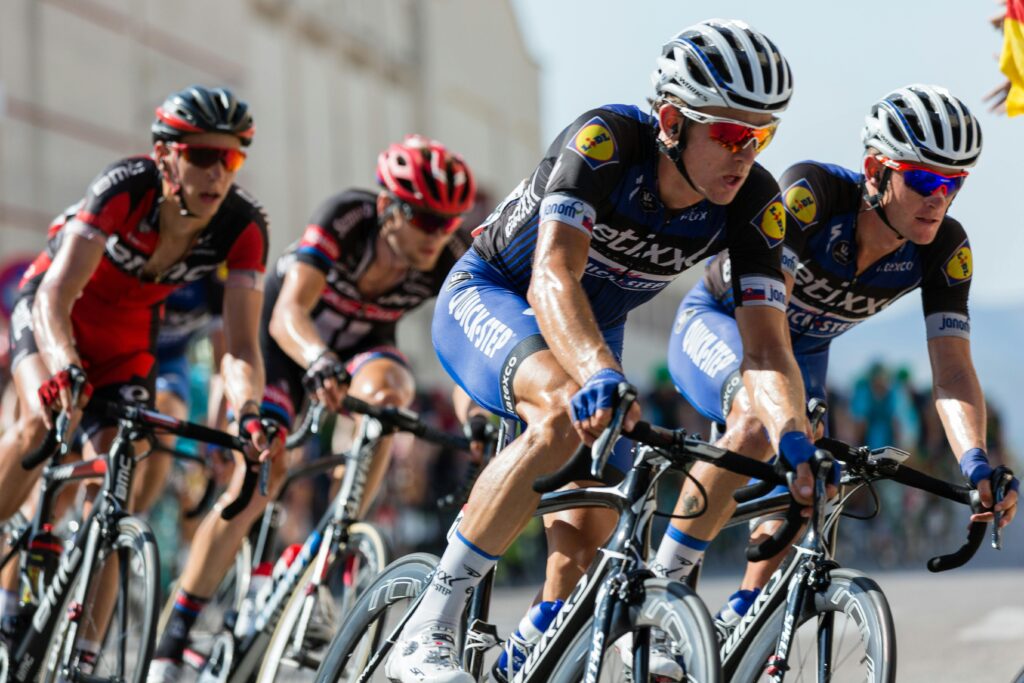
Century Ride / Gran Fondo Plans (12-16 Weeks)
Programs building endurance for 100+ mile events requiring 5-8 hours sustained effort, pacing discipline, and nutrition execution.
Key Workouts:
- Progressive long rides: 2 hours → 4 hours → 5 hours → 6 hours over 12 weeks
- Back-to-back weekend rides developing cumulative fatigue tolerance
- Race simulation: 3-4 hour rides practicing nutrition, hydration, pacing strategy
- Tempo intervals building sustained moderate-intensity tolerance
Peak Training Week (3 weeks before event): Single 80-90% event-distance ride confirming readiness, testing equipment and nutrition protocols.
Taper: Reduce volume 40-50% during final two weeks while maintaining intensity through short sweet spot or tempo efforts.
Road Racing Plans (12-20 Weeks)
Periodized programs developing diverse capabilities—threshold power for breakaways, VO2max for climbs, anaerobic capacity for surges, sprint power for finishes.
Mesocycle Progression:
- Base Phase (8-12 weeks): Zone 2 volume foundation
- Build 1 (4-6 weeks): Threshold and sweet spot focus
- Build 2 (4-6 weeks): VO2max and race-specific intensity
- Peak (2-3 weeks): Reduced volume, maintain sharpness, race weekends
Weekly Structure (Build Phase):
- Tuesday: VO2max intervals (5×5 minutes at 115% FTP)
- Thursday: Threshold work (2×20 at 100% FTP)
- Saturday: Race or hard group ride
- Sunday: Long endurance ride (2-3 hours Zone 2)
Criterium Racing Plans (8-12 Weeks)
Short-duration, high-intensity programs developing repeated surge capacity, cornering acceleration, and lactate tolerance for 30-60 minute races featuring constant intensity variation.
Key Workouts:
- Microbursts: 15 seconds hard (150% FTP) / 15 seconds easy × 15-20 repetitions
- Over-under intervals: Alternating 95% FTP and 110% FTP simulating race dynamics
- Sprint intervals: 10-30 second maximal efforts developing finishing power
- Race simulation: 60-minute efforts with surges every 2-3 minutes
Frequency: 2-3 high-intensity sessions weekly due to short race duration requiring sharp, reactive fitness versus pure endurance.
Choosing the Right Training Plan
Assess Your Current Fitness
FTP Testing: Establish baseline power identifying appropriate training zones. Beginners (2.5-3.5 watts/kg) require different progression than experienced cyclists (3.5-4.5+ watts/kg).
Training History: Athletes with consistent base training handle higher volume and intensity versus those returning from extended breaks requiring conservative progression preventing injury.
Time Availability: Realistic assessment of weekly training hours determines plan selection. Don’t choose 15-hour plans with only 8 hours available—guaranteed failure and frustration.
Define Specific Goals
Event-Driven: Training for specific events (gran fondo, stage race, century ride) dictates plan structure, duration, and specificity requirements.
Fitness-Focused: General fitness improvement without specific events allows flexible periodization emphasizing consistent volume and progressive FTP development.
Multiple Goals: Season-long racing requires maintaining fitness across extended periods versus peaking for single priority events—different periodization approaches
Consider Experience Level
Beginner (0-2 years structured training):
- Volume: 5-8 hours weekly
- Focus: Consistency, base building, learning structured training execution
- Progression: Conservative increases, extended base phases, minimal intensity initially
Intermediate (2-5 years):
- Volume: 8-12 hours weekly
- Focus: FTP development, race-specific fitness, periodization mastery
- Progression: Systematic build cycles, targeted intensity, event preparation
Advanced (5+ years):
- Volume: 12-20+ hours weekly
- Focus: Marginal gains, peak performance, multiple training blocks, sophisticated periodization
- Progression: High-volume base, intensive build phases, precise tapering, recovery management
Popular Training Plan Platforms
TrainerRoad
Adaptive training platform using machine learning adjusting workout difficulty based on performance and recovery. Plans integrate with smart trainers (Wahoo KICKR, Tacx NEO) for ERG mode precision during intervals.
Strengths: Time-efficient workouts, excellent indoor training focus, extensive plan library, progression tracking, integration with power meters and bike computers.
Plans: Sweet Spot Base, Build phases (sustained power, general build, climbing, criterium-specific), specialty phases for peak fitness.
Cost: ~$20 monthly subscription including unlimited plan access.

TrainingPeaks
Comprehensive platform offering coach-designed plans, workout calendar, performance analytics, and training stress tracking through TSS, CTL, and ATL metrics.
Strengths: Professional-grade analytics, extensive plan marketplace, mobile and desktop apps, integration with Garmin, Wahoo, Zwift, and virtually all cycling technology.
Plans: Base training, century preparation, gran fondo-specific, road racing periodization, mountain bike programs across experience levels.
Cost: Free basic accounts; Premium ($120 annually) unlocks advanced features, unlimited workout library, detailed performance management charts.
Zwift
Virtual cycling platform combining structured workouts with gamification, group rides, and racing in immersive 3D environments. Plans integrate seamlessly with smart trainers for indoor training.
Strengths: Entertainment value reducing indoor training psychological burden, social elements, races developing competitive fitness, excellent for winter base training.
Plans: FTP Builder, Gran Fondo preparation, racing-focused programs, beginner-friendly introductory plans.
Cost: ~$15 monthly subscription.
Wahoo SYSTM
Training platform (formerly Sufferfest) featuring high-quality workout videos, structured plans, and 4DP testing protocol assessing neuromuscular power, anaerobic capacity, maximal aerobic power, and FTP.
Strengths: Engaging workout videos, comprehensive fitness testing, mental training elements, integration with Wahoo hardware ecosystem.
Plans: Base building, road racing, time trial preparation, gran fondo-specific, mountain bike endurance.
Cost: ~$15 monthly or $130 annually.
Executing Your Training Plan Successfully
Consistency Beats Perfection
Missing occasional workouts doesn’t derail plans—chronic inconsistency does. Life interrupts training: illness, work demands, family commitments. Successful athletes adapt flexibly rather than abandoning plans entirely when perfection proves impossible.
Strategy: If missing scheduled workout, substitute shorter alternative maintaining training rhythm. Missed threshold intervals? Do 60-minute Zone 2 ride. Completely unavailable? Accept rest and resume next scheduled session without guilt or attempting to “make up” missed work through excessive subsequent training.
Listen to Your Body
Structured plans provide framework, not prison. Persistent fatigue, elevated resting heart rate (5+ BPM above baseline), decreased motivation, or illness signals required rest regardless of scheduled workouts.
HRV Monitoring: Heart rate variability tracking (via devices like WHOOP, Garmin, Polar) provides objective recovery metrics guiding training/rest decisions.
Nutrition and Recovery
Training plans stress your body—adaptation requires adequate fuel, hydration, and sleep. Chronic under-recovery sabotages even perfectly-designed programs.
Requirements:
- Sleep: 7-9 hours nightly, extending during intensive training blocks
- Protein: 1.6-2.2g per kg bodyweight daily supporting muscle repair
- Carbohydrates: 5-8g per kg bodyweight fueling training and recovery
- Hydration: Monitor urine color; pale yellow indicates adequate hydration
Equipment Setup
Power Meter: Essential for executing power-based plans accurately. Pedal systems like Favero Assioma Duo provide dual-sided measurement, easy installation, rechargeable batteries, and seamless integration with bike computers.
Bike Computer: Garmin Edge or Wahoo ELEMNT devices display real-time power zones, workout targets, and training stress ensuring accurate execution.
Smart Trainer: Indoor training during weather-limited months requires quality trainer. Wahoo KICKR and Tacx NEO offer accurate power measurement, realistic road feel, and perfect integration with training platforms.
Adjusting Plans Mid-Cycle

Illness/Injury: Halt training during acute illness. Return gradually: 1-2 days sick = 1-2 days easy riding; week+ illness requires 1-2 week base phase rebuilding fitness.
Exceeding Expectations: If workouts feel consistently easy with power targets exceeded comfortably, retest FTP—you may have improved beyond current zones.
Overwhelming Difficulty: Consistently failing prescribed intervals indicates overtrained state, incorrect FTP, or insufficient recovery. Reduce volume 30%, incorporate extra rest days, potentially retest FTP verifying accurate zones.
Build your foundation first: Review Base Training principles, then optimize intensity with Zone 2 strategies before starting structured plans.
Frequently Asked Questions About Training Plans
How do I choose the right training plan?
Choose training plans based on three factors: available training time (be realistic about weekly hours), current fitness level (test FTP and assess training history), and specific goals (event type, distance, intensity requirements). Beginners should start with 6-8 hour base-focused plans emphasizing consistency. Experienced cyclists can handle 10-15 hour programs with higher intensity. Match plan duration to your goal event—allow 12-16 weeks for century rides, 16-20 weeks for competitive racing.
Can I modify a training plan if it’s too hard?
Yes, adjust training plans to match your recovery capacity and life demands. If consistently failing prescribed intervals, reduce intensity 5-10% or extend rest periods between efforts. If volume feels overwhelming, cut session duration 20-30% while maintaining workout structure. Missing occasional workouts doesn’t derail plans—chronic inconsistency does. Listen to elevated resting heart rate, persistent fatigue, and decreased motivation signaling required rest regardless of scheduled training.
How long before my event should I start a training plan?
Start training plans 12-20 weeks before priority events depending on current fitness and event demands. Century rides and gran fondos require 12-16 weeks building endurance through progressive long rides. Competitive road racing benefits from 16-20 week periodization including base phase, build phases, and peak taper. If you’re already fit with consistent training, 8-12 week plans focusing on race-specific intensity may suffice.
What if I get sick or injured during my training plan?
Halt training during acute illness—pushing through sickness prolongs recovery and risks serious complications. Return gradually: 1-2 days sick equals 1-2 days easy riding; week-plus illness requires 1-2 week base phase rebuilding fitness before resuming plan intensity. For injuries, substitute non-aggravating activities maintaining cardiovascular fitness while healing. Extend training plan timeline rather than rushing back and risking re-injury or overtraining.
About the Author
JAMES HICKMAN
James Hickman is a former Expert coach with USA Cycling who coached cyclists across all skill levels, from CAT 2 racers to intermediate and beginning riders. He also served as a coach for the Leukemia and Lymphoma Society’s Team In Training program, where he successfully trained individuals of varying abilities to complete century (100-mile) rides, combining his passion for cycling with meaningful community impact.
We are an Amazon affiliate and earn from qualified Amazon purchases with no cost to you. This is for ANY product that you purchase through our links
Build your foundation first: Review Base Training principles, then optimize intensity with Zone 2 strategies before starting structured plans.